
Walking into a sportsbook can feel like entering a foreign country where everyone speaks a language you half-understand. The terminology flies around: spreads, moneylines, totals, teasers, props, parlays. Each word represents a different way to wager on football, and each comes with its own rules, risks, and potential rewards.
This guide breaks down every major bet type you will encounter when wagering on NFL and college football games. You will learn not just what each bet means but when to use it, how payouts work, and what makes one option better than another in specific situations. Some bets are simple predictions about who wins. Others let you profit from a running back’s rushing yards or whether the first score will be a touchdown.
By the end of this article, you will have the vocabulary and understanding to navigate any betting menu with confidence. More importantly, you will know which bet types align with your analysis and where the sharper edges might be hiding.
Overview of Straight Football Bets
Straight bets are the foundation of football wagering. A straight bet is any wager placed on a single outcome: one team to cover the spread, one side of a total, or one team to win outright. If that outcome hits, you win. If it does not, you lose. There is no complexity involving multiple selections or exotic conditions.
The three core straight bets in football are point spread, moneyline, and totals. Almost every other bet type builds on these fundamentals or combines them in creative ways. Before you explore parlays, teasers, or player props, make sure you deeply understand these three. They account for the vast majority of handle at sportsbooks and offer the most efficient markets for finding value.
Straight bets carry standard juice of around -110, meaning you risk $110 to win $100. This 10% margin is the sportsbook’s edge. Some books offer reduced juice promotions that cut this to -105, which meaningfully improves your long-term expected returns. When you see value on a straight bet, you are typically getting better odds than you would on more exotic wagers where the vig is higher.
Point Spread Betting Masterclass
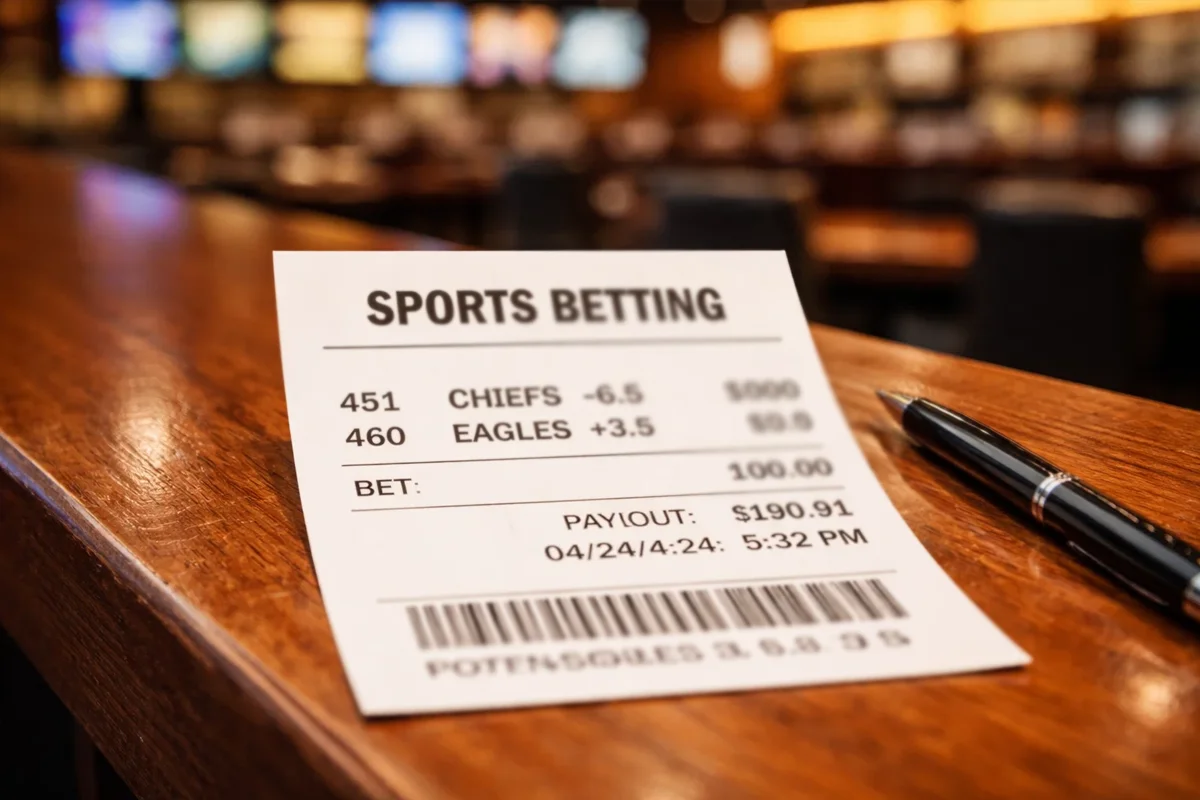
Point spread betting is the signature wager of American football. It levels the playing field between mismatched teams by assigning a handicap. The favorite must win by more than a specified margin, while the underdog can lose by less than that margin or win outright.
How Spreads Work
When you see a line reading Chiefs -6.5 (-110) versus Broncos +6.5 (-110), the Chiefs are 6.5-point favorites. If you bet Kansas City, they must win by 7 or more points. If you bet Denver, the Broncos can lose by up to 6 points and you still win. A Denver outright victory also pays.
The negative number before the favorite indicates they are giving points. The positive number before the underdog means they are receiving points. Both sides typically post at -110 odds because the spread itself creates balance.
Key Numbers Explained
Football scoring creates natural landing points for final margins. The number 3 is the most important key number, appearing in roughly 15% to 19% of all NFL games depending on the data set examined. Games ending 24-21, 27-24, 17-14: all common final scores. The difference between -2.5 and -3.5 is enormous because the -2.5 wins on any 3-point victory while the -3.5 loses.
The number 7 is the second key number, appearing as the margin in about 9% of games. After that, 6, 10, 4, and 14 show up with elevated frequency. Moving through a key number by buying or selling points might be worthwhile; moving through an insignificant number usually is not.
Half-Points and Push Scenarios
Half-points eliminate the possibility of a push. A spread of -3.5 means you either win or lose. A spread of -3 means a victory by exactly 3 points results in a push, and your stake is returned. The half-point matters most around key numbers like 3 and 7.
A push returns your stake with no profit and no loss. In parlays and teasers, pushes typically result in that leg being removed from the bet, converting a three-team parlay into a two-team parlay with adjusted odds.
Real Examples
The Philadelphia Eagles host the Washington Commanders with a spread of Eagles -4.5 (-110). Final score: Eagles 23, Commanders 20. Washington loses by 3 but covers the spread at +4.5. Your underdog bet wins.
College football offers larger spreads. Alabama hosts ULM with the Tide favored by 35 points. Final score: Alabama 42, ULM 10. The margin is 32 points. ULM covers despite losing badly, and your +35 bet cashes.
Moneyline Betting Complete Guide
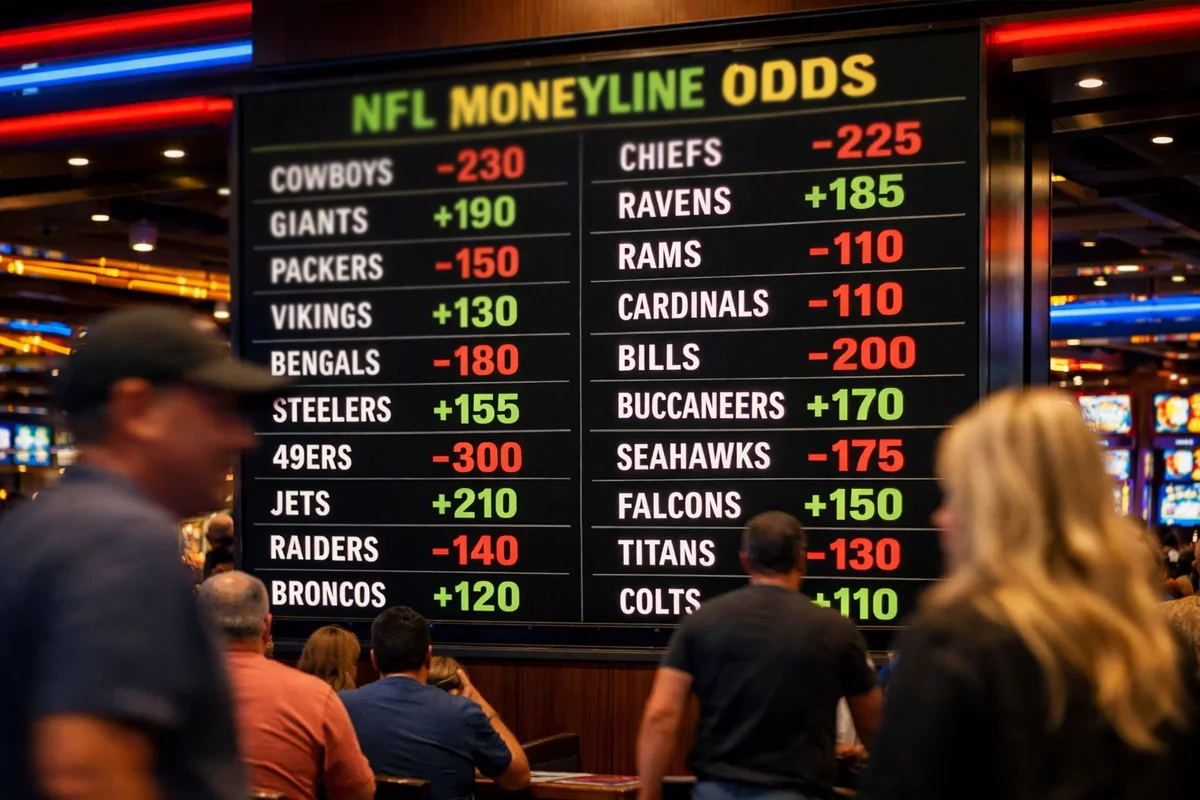
Moneyline betting strips away the spread entirely. You are simply picking which team wins the game. Favorites pay less than even money while underdogs pay more. The simplicity appeals to casual bettors, but understanding when moneyline value exists separates smart bettors from recreational ones.
When to Bet Moneyline
Moneyline betting makes sense in several specific situations. First, when you believe a favorite will win but worry about covering a large spread. If the Ravens are -7.5 on the spread but you think they win by a field goal, the moneyline removes the margin requirement. You pay more juice for less stress.
Second, when underdogs offer plus-money odds exceeding your probability estimate. If you calculate a team has a 35% chance to win and they are priced at +250 (implied probability 28.6%), the moneyline offers value that spread betting might not capture.
Third, in defensive battles where tight margins favor straight winner bets. A game expected to be low-scoring with a small spread might offer better risk-reward on the moneyline, especially if you expect a one-score decision.
Once you understand the basics of moneylines and point spreads, you can maximize your potential payouts by learning how to build winning football parlays.
Heavy Favorites vs Underdogs
Heavy favorites at -400 or worse present a trap for casual bettors. Risking $400 to win $100 sounds reasonable when you expect a team to win easily. But upsets happen every week. Injuries happen. Bad bounces happen. When that -400 favorite loses, you need four consecutive winning bets at the same odds just to break even.
Markets tend to overvalue favorites because casual bettors prefer backing winners. This creates slight inefficiencies on underdog moneylines, particularly in college football where public perception is less accurate. A disciplined underdog strategy focused on finding mispriced lines can outperform blind favorite betting over time.
The sweet spot for moneyline value often sits in the +130 to +200 range. These underdogs have legitimate paths to victory but the market is discounting them. They win frequently enough to overcome the higher strike rate needed for profitability, and the payouts are substantial enough to matter when they do hit.
Calculating True Value
Convert moneyline odds to implied probability and compare against your analysis. A team at +175 has an implied probability of 36.4%. If your model or analysis says they have a 40% chance to win, you have found an edge of nearly 4 percentage points. That edge, exploited consistently, produces long-term profit.
The reverse analysis applies to favorites. A team at -200 implies 66.7% probability. If you think they only win 60% of the time, there is no value even when they are likely winners. In fact, you are giving away edge by betting. Smart bettors pass on negative-value favorites even when those favorites end up winning the game. The math does not care about any individual outcome; it cares about the aggregate.
Totals (Over/Under) Strategy
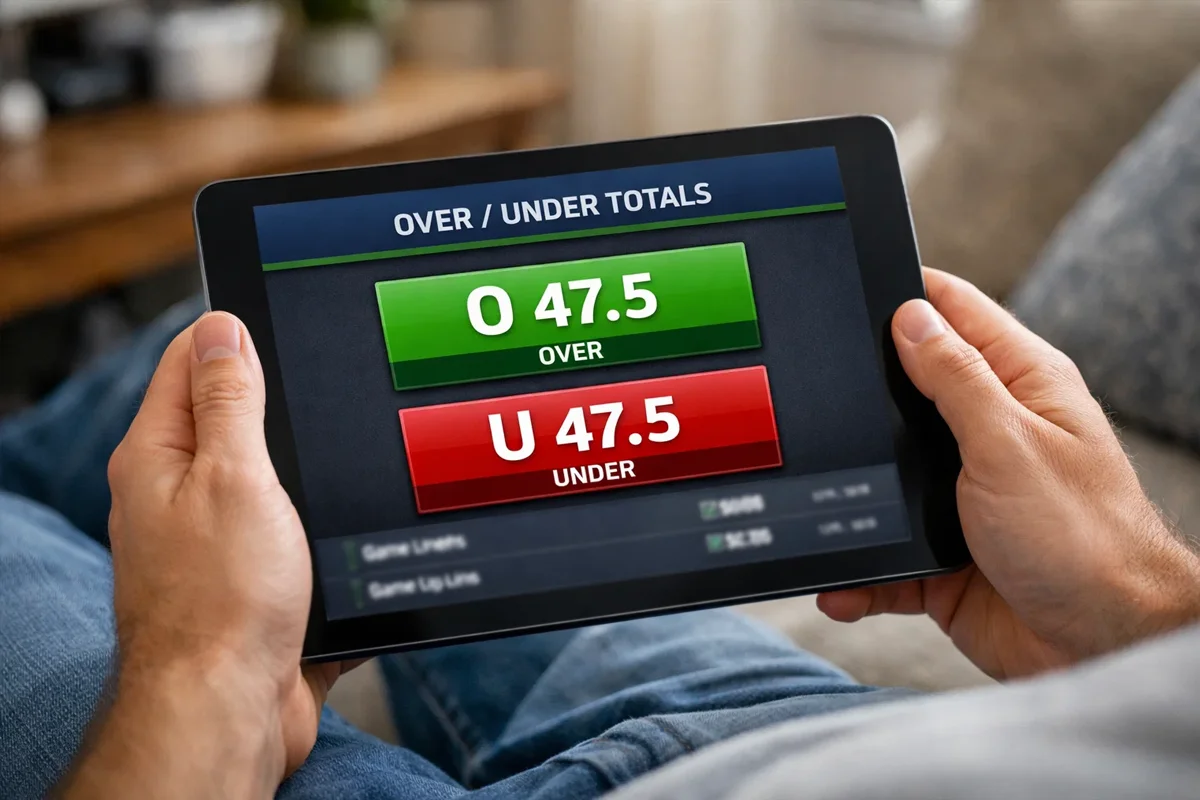
Totals betting removes team allegiance entirely. You are betting on the combined final score of both teams, predicting whether it finishes over or under a number set by the sportsbook. This market appeals to bettors who have opinions about game flow, pace, and conditions rather than who wins.
How Totals Are Set
Sportsbooks project final scores based on historical data, team tendencies, matchup analysis, and sophisticated algorithms. If they expect the Bills-Dolphins game to land around 51 total points, they set the line at 50.5 or 51. Betting action then shapes the line as opinions flow in from the market.
Opening totals can differ significantly from closing totals. A line might open at 48.5 and close at 46 if sharp money pounds the under throughout the week. Weather forecast changes have major impact on outdoor games. A sunny afternoon projection moving to rain and 25 mph wind will crater a total by several points. Tracking these movements helps you understand what information the market is processing.
The juice on totals typically sits at -110 on both sides, identical to spread betting. Beating totals markets consistently is no easier than beating spreads despite the perception that projecting aggregate points is simpler than picking sides.
Factors Influencing Game Totals
Offensive efficiency metrics drive total expectations. Teams with high EPA (expected points added) per play push totals higher in any matchup. The top five offenses in the league see elevated totals nearly every week. Conversely, elite defenses drag totals down. When a top-5 offense meets a top-5 defense, the total might sit closer to league average as the market balances competing factors.
Pace of play matters independently of efficiency. Teams that run more plays per game create more scoring opportunities regardless of how well they convert. A fast-paced team averaging 70 snaps per game will see higher totals than a methodical team averaging 58 snaps, all else being equal. Check snap counts and time-of-possession trends when analyzing totals.
Weather remains the elephant in the room for outdoor games. Wind above 15 mph suppresses passing and kicking accuracy. Rain and snow further complicate execution. Cold temperatures allegedly affect grip, though the data is mixed. Snow games see totals drop by 5+ points from original projections, sometimes more for extreme conditions.
First Half, Second Half, and Team Totals
First-half totals are typically set at slightly less than half the full-game total. If the full game is 48.5, the first half might be 23.5 or 24. This accounts for the fact that second halves sometimes see more conservative play as teams protect leads or run clock.
Betting first-half totals requires different analysis than full-game totals. Scripted opening drives favor overs early since teams execute their best plays to start. Teams that start fast but fade might be first-half over candidates even if the full-game total is a coin flip. Conversely, teams making excellent halftime adjustments might produce more second-half scoring.
Team totals isolate one team’s scoring rather than the combined total. You might see Eagles team total set at 27.5 while the full-game total is 48.5. This is useful when you have an opinion about one offense but not the other. Perhaps you believe the Cowboys defense will dominate but have no read on Dallas’s own scoring. Betting the opponent’s team total under lets you express that view directly. The juice on team totals sometimes exceeds standard -110 because these are less liquid markets.
Prop Bets Encyclopedia
Proposition bets let you wager on specific events within a game rather than the final outcome. The variety is vast: player statistics, first-half results, scoring sequences, and everything in between. Props have exploded in popularity and now constitute a significant portion of sportsbook handle.
Player Performance Props
Player props focus on individual statistical outputs. How many passing yards will Dak Prescott throw? Will Derrick Henry rush for over 89.5 yards? These questions have posted lines with over/under options just like game totals.
Quarterback passing yards are the highest-volume player prop. Lines typically range from 220 to 320 yards depending on the player, matchup, and game environment. Passing touchdowns are another common quarterback prop, usually set at 1.5 or 2.5 with adjusted juice. Interceptions, completions, and rushing yards for mobile quarterbacks round out the quarterback prop menu.
Running back props cover rushing yards, receiving yards, and touchdowns. The rushing yards line varies wildly by player role. A bell-cow back might see 85.5 yards while a committee back sits at 45.5. Receiving yards for running backs catch casual bettors off guard; pass-catching backs in favorable matchups sometimes offer over value that pure rushing totals do not reflect.
Wide receiver props include receiving yards, receptions, and longest reception. These markets are volatile because receiver production depends heavily on game script. A receiver might see 12 targets in a comeback situation but only 4 targets in a blowout win. Understanding how game flow affects individual opportunities is critical for receiver props.
Game Props
Game props focus on events rather than final results. Which team scores first? Will there be a safety? What will be the first scoring play? These bets add entertainment value even when you have no strong opinion on who wins.
First scoring play props typically offer touchdowns at -140, field goals at +160, and safeties at +2500. Historical data shows touchdowns and field goals account for the vast majority of first scores, with touchdowns slightly more common. The safety at 25-to-1 hits rarely but provides a memorable win when it does.
Margin of victory props let you bet on the final point differential falling within certain ranges. You might see 1-3 points at +350, 4-6 points at +450, and 7-10 points at +400. These bets correlate loosely with spread betting but offer different risk profiles and payouts.
Will there be overtime? Usually priced around +1200, this prop hits about 5-7% of NFL games historically. Some bettors take this as a small entertainment stake when two evenly matched teams play.
Super Bowl Prop Betting
The Super Bowl offers hundreds of prop markets weeks before the game. MVP winner, first touchdown scorer, exact final score, total touchdowns by each team, individual player milestones: the menu goes on for pages.
Some Super Bowl props offer genuine analytical opportunities. First touchdown scorer prices often undervalue running backs and tight ends while overpricing star receivers who draw extra defensive attention. MVP betting typically overvalues quarterbacks because they win most often, but non-quarterback longshots occasionally deliver massive payouts when a defensive player or running back dominates.
Managing bankroll during Super Bowl prop season requires discipline. The temptation to bet dozens of small markets adds up quickly. Stick to props where you have genuine opinion rather than spraying action across the full menu. The house edge compounds when you are betting 30 different markets.
Parlays and Teasers Explained
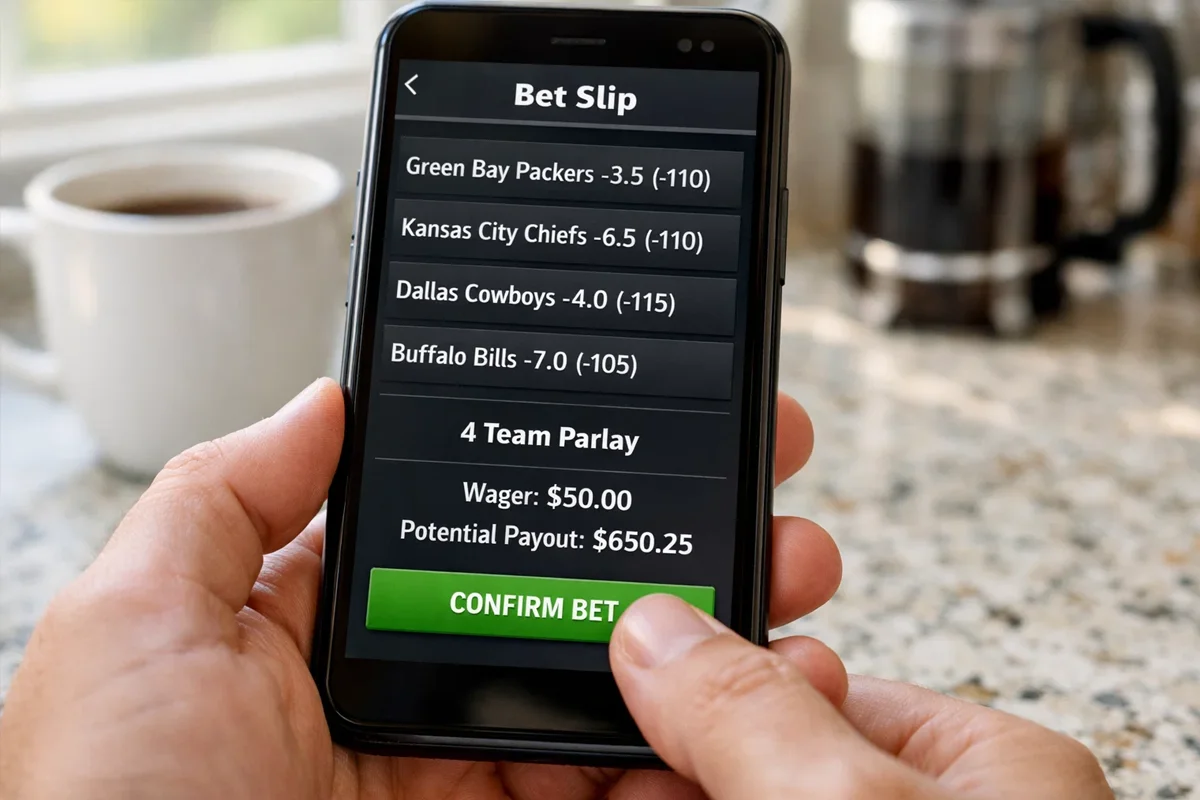
Parlays and teasers combine multiple selections into a single bet with enhanced payouts. They are among the most popular wagers at sportsbooks despite offering worse expected value than straight bets. The appeal is obvious: modest stakes can produce large returns. The math, however, is less friendly than it appears.
Building a Parlay
A parlay requires all selections to win for the bet to cash. A three-team parlay combining Chiefs -3, Ravens -7, and Bengals +4 pays only if all three cover. One loss, and the entire parlay loses. Two wins and one loss still equals zero payout. This all-or-nothing structure drives the elevated payouts.
Standard parlay odds escalate with each leg. A two-team parlay at -110 on each leg pays roughly +264 (about 2.64 to 1). A three-teamer pays around +596 (about 6 to 1). A four-teamer around +1228 (about 12.3 to 1). These payouts look attractive until you consider the win probability required.
The break-even hit rate for a two-team parlay is about 27.3%. For three teams, it drops to 14.3%. Four teams, 7.7%. The more legs you add, the harder consistent profitability becomes. This mathematical reality is why sharp bettors generally avoid parlays except in specific correlated situations where the sportsbook has mispriced the combination.
Parlay Payout Variations
Sportsbook parlay payouts are not standardized. Each book uses its own payout table, and the differences add up. A four-team parlay might pay 10 to 1 at one book and 11 to 1 at another. Before placing parlays, compare the payout schedules across your sportsbook accounts.
Fixed-odds parlays use preset payout multipliers regardless of the individual lines. True-odds parlays calculate payouts based on the actual odds of each selection. True-odds parlays generally treat bettors more fairly, especially when combining favorites and underdogs. Check whether your sportsbook offers true-odds parlay pricing.
Teaser Adjustments
Teasers allow you to move the point spread in your favor in exchange for reduced payouts. The standard football teaser buys 6 points on each selection. A two-team, 6-point teaser typically pays around -120 (bet $120 to win $100).
The most famous teaser strategy targets key numbers. Buying a favorite from -7.5 to -1.5 crosses both 7 and 3, the two most important key numbers in football. Buying an underdog from +1.5 to +7.5 accomplishes the same. These “Wong teasers,” named after gambling author Stanford Wong, have historically shown positive expected value when applied correctly with the right selections.
Teaser payouts vary by points bought and number of legs. Some books offer 6.5-point or 7-point teasers at different prices. Three-team teasers pay more than two-team teasers but require an additional win. Run the math before assuming any teaser offers value.
Same-Game Parlays
Same-game parlays combine multiple selections from a single game. You might parlay a team to cover, the over to hit, and a player to score a touchdown all in the same contest. Sportsbooks love same-game parlays because they set the odds with substantial vig built in.
Correlation works against you in same-game parlay pricing. The sportsbook’s algorithm accounts for how selections interact. If you parlay a team winning by 14+ and the game going over 50, those outcomes correlate positively. The payout adjusts downward from what you would get on independent legs. Treat same-game parlays as entertainment rather than core strategy components.
Futures and Season Bets
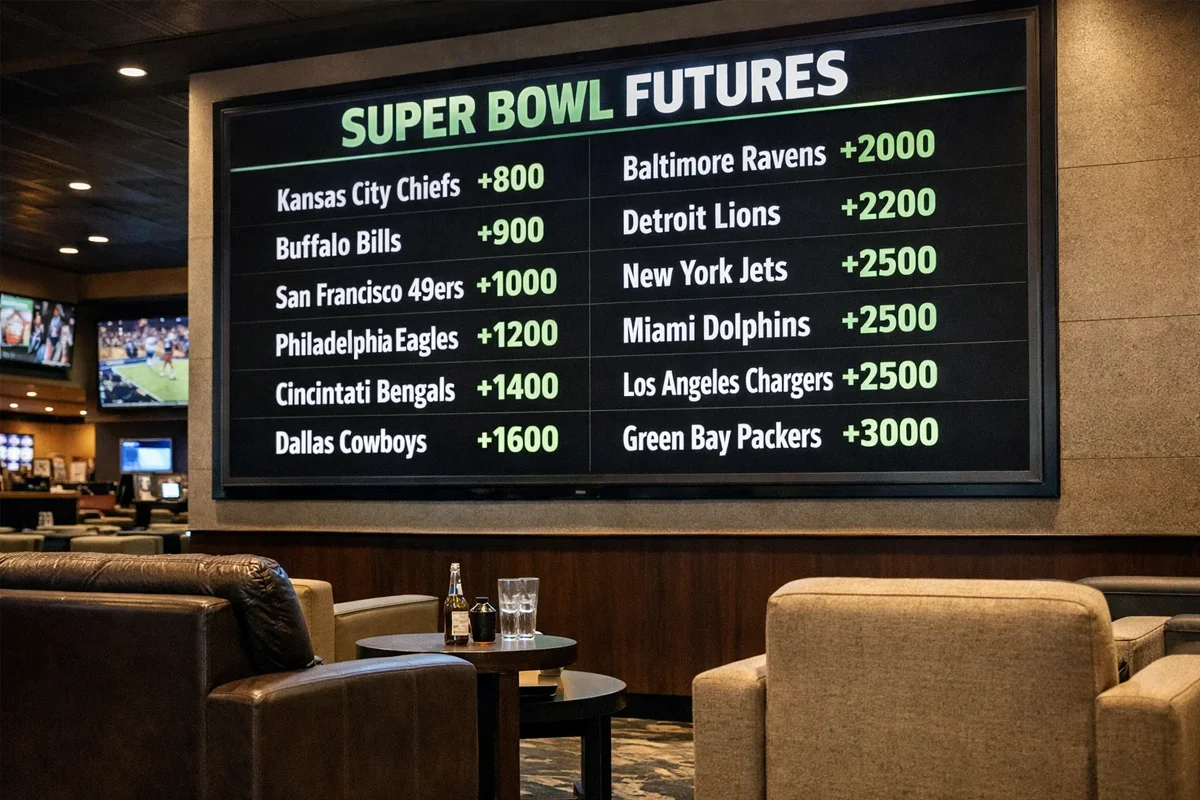
Futures betting locks money up for weeks or months in exchange for potentially large payouts on season-long outcomes. Who wins the Super Bowl? Which quarterback takes MVP? How many games does your team win? These markets open in the offseason and remain active throughout the year.
Super Bowl Futures
Super Bowl futures are the flagship futures market. Odds are posted months before the season and update weekly based on results, injuries, and betting action. A team might open at +2500 in May and drift to +400 by December as they dominate their conference.
Betting futures early offers larger payouts but higher risk. The team you back in July might lose their quarterback in August. Betting futures late offers lower payouts but more information. You see half a season of actual performance rather than projecting from spring speculation.
Sharp futures bettors focus on identifying mispriced teams before the market corrects. If your analysis says a +3000 longshot actually has a 5% chance to win it all (fair odds would be +1900), there is value despite the long odds. Most recreational bettors bet favorites and popular teams, creating inefficiency on the fringes where patient bettors can find edges.
Division, Conference Winners, and Player Awards
Division futures offer shorter paths to payout than Super Bowl bets. Winning your division does not require a championship run, just outperforming three or four other teams. This reduces variance while still offering attractive odds on underdogs. Conference futures require playoff success but not ultimate victory, providing a middle ground.
The structure of NFL divisions creates strategic opportunities. A weak division might have teams priced at +140, +200, +350, and +1000 to win it. If your analysis differs from consensus, division futures let you express that view with less variance than Super Bowl futures.
MVP voting historically favors quarterbacks on successful teams. A 4,500-yard, 35-touchdown season from a 13-win team beats a 5,000-yard, 40-touchdown season from a 10-win team in voter minds. Understanding this bias helps identify value and avoid traps. Rookie of the Year markets are particularly volatile as preseason favorites often disappoint while unknown late-round picks or overlooked contributors emerge.
Win Totals
Win totals let you bet over or under on a team’s regular season victory count. The Cowboys might be posted at 10.5 wins with -115 on both sides. You bet based on whether Dallas finishes 11-6 or better versus 10-7 or worse.
Win total lines are set to attract balanced action, meaning the sportsbook expects roughly equal betting on each side. When a line moves from 10.5 to 11, sharp money has moved it. Track opening lines to closing lines to see where respected opinion landed.
The value in win totals comes from projecting final records more accurately than the market. If you believe injuries, schedule difficulty, or regression will push a team under their posted total, there may be edge. If you see a breakout candidate underpriced by the market, the over might pay handsomely.
Live and In-Play Betting
Live betting allows you to wager throughout the game as odds update in real time. The spread, moneyline, and total shift constantly based on score, time remaining, and game flow. This dynamic market has grown explosively and now represents a major portion of football betting handle.
How Live Odds Work
Live odds react to the scoreboard and game clock. If a 3-point underdog takes an early 14-0 lead, their live moneyline might swing from +140 to -200. The pregame spread of +3 might become -10 for that same team. Every drive, every score, every turnover adjusts the numbers.
Sportsbooks update live odds using algorithms that incorporate win probability models. These algorithms are sophisticated but imperfect. They sometimes over-react to fluky events or under-react to injury news that has not yet been publicized. Spotting these discrepancies is the core edge in live betting.
The speed of live markets demands quick decision-making. Odds might be available for only 15-30 seconds before updating again. If you see a number you like, act immediately. Hesitation often means missing the line entirely.
Best Live Betting Strategies
The most common live betting edge comes from situational overreaction. When a team goes down 14-0 due to two fluky turnovers rather than genuine domination, they might be underpriced. The scoreboard says one thing, but the actual game flow says another. Recognizing when a scoreline misrepresents the game state creates opportunities.
Injury recognition offers another edge. A star player leaves the game, but the live line has not adjusted because the sportsbook does not know yet. If you are watching closely and notice the absence before the algorithm catches up, you can bet into stale lines.
Fading public panic is a consistent theme in live betting. When pregame favorites fall behind, recreational money abandons them, creating value on live comebacks that sophisticated models already price correctly but the betting public does not. The public overreacts to negative developments; sharp live bettors capitalize.
Managing Live Betting Risk
The risk in live betting is churning through bankroll too quickly. The continuous action can encourage over-betting if discipline wavers. You see an opportunity every few minutes, and the temptation to bet constantly is real.
Set firm limits on live betting volume and treat it as a supplement to pregame wagering rather than a replacement. The best live bettors pick their spots carefully rather than betting every swing. They watch for specific situations where their read differs from the market and strike only then.
Conclusion
Football betting offers a bet type for every opinion and situation. Spread betting levels the playing field between mismatched teams. Moneylines let you pick winners without margins. Totals remove team allegiances and focus on scoring pace. Props let you bet on individual performances. Parlays and teasers combine selections for elevated payouts. Futures extend your horizon to season-long outcomes. Live betting brings real-time action to your game-watching.
The key is matching bet type to analysis. If you have a strong opinion about the final margin, bet the spread. If you just like a team to win, consider the moneyline math. If weather or pace analysis is your edge, focus on totals. Do not bet props without researching matchups and usage projections. Approach parlays with clear eyes about their mathematical disadvantage.
Master these fundamentals, and every game becomes an opportunity to apply what you know. For the most competitive odds across all bet types, always make sure you are using a top-rated football betting site.
